

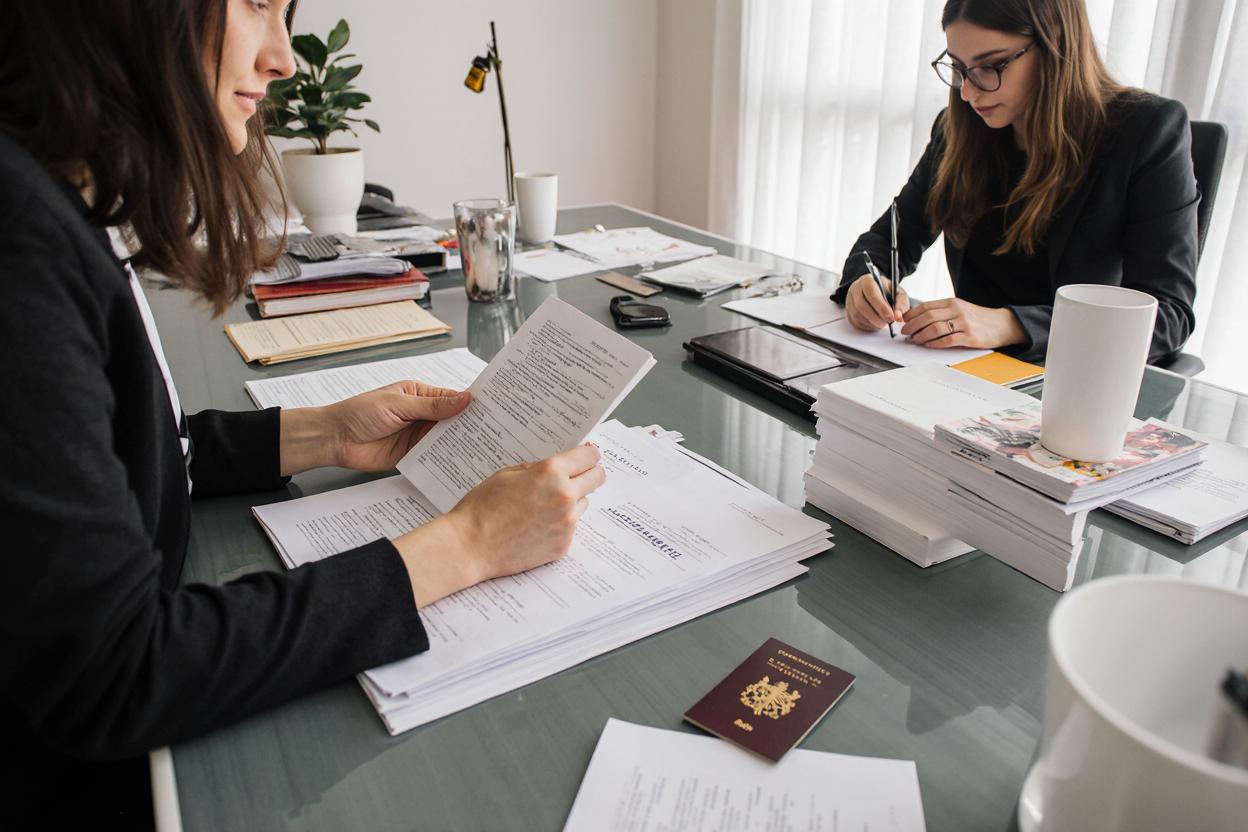
Why preparation decides your visa outcome
Most visa refusals in Australia do not turn on eligibility. They turn on paperwork. A missing back page on a birth certificate, a police clearance that aged past its useful window, or a translated document that arrived without a compliant certification block. The Department of Home Affairs decided on more than 185,000 permanent skilled places across the 2023 to 2024 program year, and documentation gaps sat behind a large share of the requests for further information sent during that cycle. Getting your file in order before you lodge is the single highest leverage move an applicant can make.
This guide walks through a four stage readiness framework that mirrors how an experienced applicant actually works. Each stage carries a decision point. Clear it cleanly and the next stage becomes easier. Skip it and the cost surfaces later, usually in the form of a delay you cannot recover. If you want a hand at any point our professional translation team handles the language side of this work for visa applicants every day.
Quick answer for busy applicants
Only documents that are not in English need translation for an Australian visa. Onshore lodgements need a NAATI credentialled practitioner. Offshore lodgements accept translators officially accredited in the country of origin, provided the translator name, address and credentials appear in English on every page. Everything else is about scan quality, timing and correct upload categories.
Stage one, source document sourcing
The file starts with the originals. A visa officer expects to see the most current version of every document issued by the relevant authority. That means the reissued birth certificate rather than the family copy from thirty years ago, the recent police clearance rather than the one from a previous visa, and the certified copy of any qualification you cannot part with in original form.
A certified copy carries a specific legal meaning. The National Archives of Australia sets out what qualifies on its guide to what a certified copy is, and case officers apply the same standard. A photocopy signed by a friend does not qualify. A copy stamped and dated by an authorised witness does. Get this right at the start and no later stage of your file has to compensate for a weak foundation.
Documents most applicants need to source
- Full birth certificate showing both parents.
- Marriage or partnership certificate where relevant.
- National police clearance from every country lived in for twelve months or more since age sixteen.
- Academic transcripts and award certificates for any qualification claimed.
- Passport biodata page and any prior visa labels.
Stage two, scanning and digital quality
Once you hold the originals, the file moves from paper to pixels. This is where most applicants lose time without realising it. A scan that looks fine on a phone screen often fails when a case officer opens it at full size on a desktop monitor. Text goes soft, stamps blur, and the reverse side of a certificate gets forgotten entirely.
The working standard is straightforward. Scan every page in colour at three hundred dots per inch minimum. Capture the full page inside the frame, edge to edge, with no cropped corners. Photograph the reverse side separately whenever it carries any stamp, seal or notation. Save the result as a PDF rather than a photo, because ImmiAccount handles PDF more reliably and preserves the document layout your translator will need to reproduce.
| Document | Required format | Common rejection reason | Translation trigger |
|---|---|---|---|
| Birth certificate | Colour PDF, both sides | Missing reverse side or issuing seal | Any non English text on the page |
| Marriage certificate | Colour PDF, full page | Cropped registrar signature | Any non English text on the page |
| Police clearance | Colour PDF, all pages | Expired issue date at lodgement | Issued in language other than English |
| Academic transcript | Colour PDF, sealed copy | Photocopy without institution seal | Transcript printed in local language |
| Passport pages | Colour PDF, biodata and stamps | Glare on the biodata photo | Bilingual pages rarely need translation |
Stage three, translation commissioning
Translation happens after sourcing and scanning, not before. Applicants who translate too early often pay twice, because a document reissued during the process invalidates the earlier translation. Wait until you hold the final version of every source document and then commission the translation work in one batch.
Choose a NAATI credentialled practitioner for any document destined for an onshore lodgement. The certification block must carry the translator name, the practitioner number, the credential type, the language direction, the date of certification and a signature on every page. A translation without those six elements is not compliant, regardless of how accurate the words are. For a common document like a birth certificate, a specialist service such as our NAATI birth certificate translation workflow returns a compliant PDF suitable for direct upload, usually within two to three business days.
Indicative cost and turnaround in AUD
| Document | From price | Standard turnaround |
|---|---|---|
| Birth or marriage certificate | From $44.95 | From 2 to 3 business days |
| Police clearance | From $44.95 | From 2 to 3 business days |
| Academic transcript | From $69.95 | From 2 to 3 business days |
| Short extract translation | From $44.95 | From 1 business day |
Prices reflect standard turnaround estimates and are not guaranteed delivery windows. Complexity, source quality and language pair can extend the timeline.
Stage four, lodgement packaging
The final stage is where preparation meets execution. ImmiAccount is unforgiving about oversized files, wrong evidence categories and inconsistent naming. Keep each PDF under five megabytes as a working ceiling, name every file with a clean surname, document type and date pattern, and map each translated document to the correct evidence category before you upload.
A clean upload pattern is the difference between a case officer moving through your file in one sitting and one asking for a second look. Applicants who want the mechanical detail on the upload side can work through our step by step walkthrough on uploading NAATI translations to ImmiAccount correctly, which sets out the naming rules, evidence categories and file size behaviour that catch most first time applicants off guard. The Department of Home Affairs also publishes clear guidance on the health and character side of the evidence pack through its page on health examinations, which sets out how medical documents and clearances flow into the same file.
Applicant type quick reference
| Visa | Documents that usually need translation | Typical timing pressure |
|---|---|---|
| Subclass 189 Skilled Independent | Birth certificate, police clearance, qualifications | Invitation to lodgement window is 60 days |
| Subclass 820 Partner | Marriage certificate, statutory declarations, relationship evidence | Relationship evidence accumulates over years |
| Subclass 500 Student | Academic transcripts, birth certificate, financial evidence | CoE to lodgement is often tight |
| Subclass 482 Skilled Employer Sponsored | Qualifications, employment references, police clearance | Nomination approval starts the clock |
Real cost of getting it wrong
The Department reports that requests for further information typically add around twenty eight days to a decision timeline. For a partner visa applicant on a bridging visa waiting for work rights, that delay compounds financially. For a skilled applicant sitting on a 60 day invitation window, a poorly prepared file can push the entire application past the window and force a fresh Expression of Interest. The direct cost of correct translation and preparation is a fraction of that risk.
Frequently asked questions
Do I need to translate every document in my file?
Only documents that are not in English need translation. English language documents from any issuing authority are accepted as they are.
Can I translate my own documents?
No. Personal translations are not accepted. Onshore lodgements need a NAATI credentialled practitioner, and offshore lodgements need a translator officially accredited in the country of origin.
How long does document preparation usually take?
Sourcing originals and certified copies is often the longest step and can run from a few weeks to a few months. Scanning takes an afternoon. Translation runs from one to three business days per document under standard turnaround.
What happens if I lodge with an incomplete file?
The case officer usually issues a request for further information. Responses reset parts of the timeline and can push decision dates weeks or months further out.
Key takeaways
- Source the most current version of every document before anything else.
- Scan in colour at three hundred dots per inch, both sides captured.
- Translate last, not first, so a reissued document does not waste the work.
- Use a NAATI credentialled practitioner for any onshore lodgement.
- Map every file to the correct ImmiAccount evidence category before upload.
Preparation is the quiet edge every successful applicant relies on. Move through the four stages in order, respect the timing of each document, and your file arrives on the case officer's screen ready to be decided rather than ready to be questioned.