

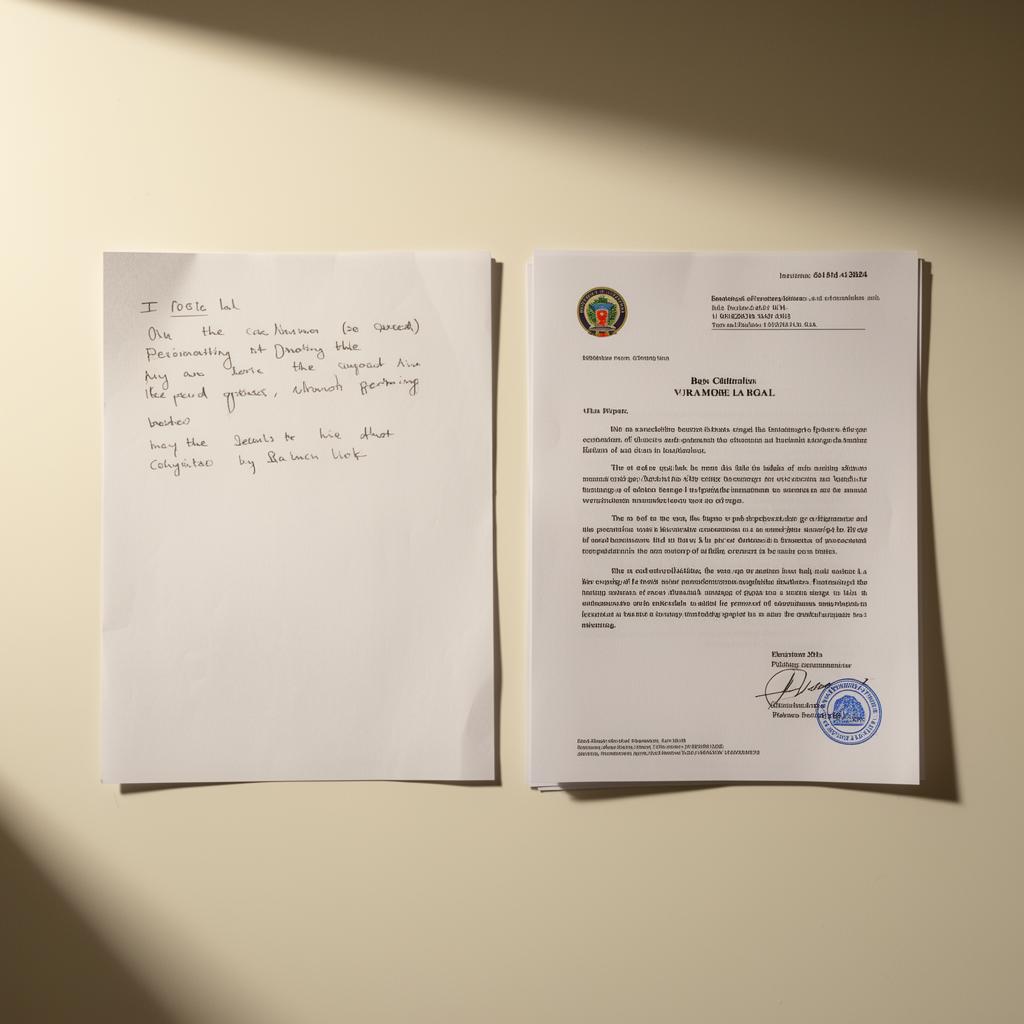
A Sydney case officer opens two envelopes on the same morning. The first holds a translation typed in a free template, with a translator name printed at the bottom and a signature scrawled across a blank line. The second carries the same source certificate, but the layout mirrors the original, the certifying statement sits clean above a credential number, and the page tracks back to a public register. Both translators charged the applicant. Only one envelope moves to the approval pile. The other returns with a short note asking for a compliant version.
This guide walks through the visible and invisible differences between a poor translation and a NAATI compliant one. It covers the markers an assessor checks first, the cost of getting the translation of documents wrong, and the quick checks that protect your lodgement before it leaves your desk.
Quick answer
A NAATI compliant translation meets every one of the naati translation requirements that Australian authorities look for: the translator's full name, a current NAATI Certified Practitioner Number, a signed certification statement, and a layout that mirrors the source. A poor translation usually misses one or more of these markers, which is why authorities return it before the file reaches assessment.
The two documents side by side
Most applicants only see the difference once an authority rejects the work. By then the timeline has already slipped. The table below sets out the six markers that separate a compliant page from one that fails on first review.
Comparison table
| Element | Poor translation | NAATI compliant translation |
|---|---|---|
| Translator credential | None listed or expired | Current NAATI Certified Practitioner Number printed in full |
| Certification statement | Missing or vague | Signed statement of accuracy on every page |
| Layout fidelity | Plain typed paragraphs | Mirrors the source document including stamps and annexes |
| Page integrity | Single page summary of a multi page source | Full document including reverse pages and seals |
| Verification | No trace on a public register | Practitioner searchable on the NAATI public directory |
| Acceptance | Frequently returned to the applicant | Suitable for organisations across Australia |
Two documents can look similar at a glance. Authorities are trained to read the second column. They will check the credential number first, the signature next, and the formatting last. A page that fails the first check rarely reaches the rest of the review.
Why Australian authorities return non compliant translations
Home Affairs, state courts, universities, employers and skills assessors share the same baseline rule. Any document not originally in English must be translated by a credentialled translator before it joins an application file. The rule exists to protect the assessor. An untraceable translation has no chain of accountability, which means the assessor cannot rely on the words on the page.
The published guidance is clear about what a compliant file looks like. For applicants lodging from inside Australia, the rule is set out in the official Home Affairs translating documents guidance, which names NAATI as the credentialling body for onshore lodgements. The same standard sits behind official document translation services used by universities, registries and skills assessors. A translation that cannot show a current credential, a signed statement, and accurate layout fails one of these touchpoints in almost every case.
Red flags that signal a poor translation
A trained eye picks the difference in under a minute. The list below covers the markers that show up most often on returned files, in the order an assessor usually checks them.
- The translator's NAATI Certified Practitioner Number is absent or expired
- The certification statement is missing, generic, or copied from another file
- The signature sits in a different position on every page
- The layout reads as a plain Word template with none of the source formatting
- Stamps, seals and reverse page text are summarised in a footnote
- The translator's name does not appear on a verifiable public register
The last point is the easiest to test from your own desk. Search the practitioner name through the NAATI Find a Practitioner directory. A current credential returns a record with the practitioner's certification details. A name with no record is a clear signal to walk away before you pay. This single check sits at the heart of the document translation naati workflow.
The real cost of getting it wrong
Applicants often focus on the price of the translation itself. The price is the smallest cost in the chain. The table below shows the wider impact of a non compliant file.
| Outcome | Poor translation | NAATI compliant translation |
|---|---|---|
| Processing impact | Request for further information | File moves into assessment |
| Timeline impact | Weeks added to the visa decision | Standard turnaround applies |
| Resubmission cost | Original fee plus the cost of a compliant version | One fee from $44.95 AUD |
| Refusal risk | Elevated under Section 4020 grounds | Low when the rest of the file is sound |
The cleanest way to avoid the resubmission loop is to choose a credentialled provider at first lodgement. Migration Translations issues certified document translation services for visas, courts, schools, employers and skills assessors. Our naati certified translation service runs entirely online with fixed prices from $44.95 AUD and standard turnaround times set out openly on each service page.
A before and after walkthrough
Layla is preparing a Subclass 309 partner visa from Beirut. Her birth certificate is in Arabic. A neighbour with strong English offers to type a translation for a small fee. The page comes back clean, with the neighbour's name and a handwritten signature. Layla lodges the file with the rest of her supporting paperwork.
Four weeks later, a case officer flags the translation. The neighbour does not appear on the NAATI register. The certification statement reads as a generic paragraph copied from a forum post. The page summarises three lines of the registrar's seal in a single bracketed note. Home Affairs requests a compliant version before it will continue the assessment.
Layla orders a fresh translation through a credentialled provider. The new page carries a current Certified Practitioner Number, a signed statement on every page, a full reproduction of the seal and a layout that mirrors the source certificate. The order moves through the standard turnaround quoted on the birth certificate translation service page. Within a week the file is accepted and the assessment continues. The lost weeks never return, but the next stage of the application moves forward without a second hold.
How to verify a translation before you lodge
The three checks below take less than five minutes and catch the issues that drive most rejections.
- Search the translator's full name on the NAATI public directory and confirm the credential is current.
- Read the certification statement on every page and confirm it carries a wet or digital signature, a date, and a printed credential number.
- Lay the translation next to the source and confirm every stamp, seal and reverse page is reproduced rather than summarised.
If you are still mapping which documents need a certified version before you lodge, our guide on which visas require NAATI certified translations sets out the subclasses and the documents that trigger the requirement most often.
Key takeaways
- A compliant translation carries a current NAATI credential, a signed certification statement, and a layout that mirrors the source.
- Authorities check the credential first, so a missing or expired number returns the file before the words are read.
- The real cost of a poor translation is the lost weeks on your timeline, not the fee on the original invoice.
- Five minutes of verification on the NAATI register prevents most rejections.
The difference between a poor translation and a NAATI compliant one is not about effort or intent. It is about whether the page can be traced, verified and read by an Australian authority on the same morning it lands on a desk. Choose a credentialled provider at the start, verify the credential yourself, and your application moves at the pace of your lodgement rather than the pace of a returns tray.
About the author
Sophie Bennett is a senior translation consultant at Migration Translations. She reviews visa, court and university document files and writes plain language guidance for applicants preparing lodgements across Australia.